Wednesday, February 11, 2015

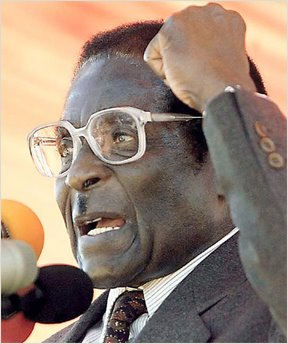
Mugabe's Latest Act of Terrorism

Mugabe Terrorism

Mugabe's Operation Murambatsvina (sweep up the rubbish)

The tragic deaths of three people, including two children (a 4 year old and an 18 month old baby) during the forced destruction of dwellings at Porta Farm on the outskirts of Harare on the 30th June serves to confirm the ruthless nature of Operation Murambatsvina. To date at least eight deaths have been confirmed nationwide. Many more have been reported but cannot be confirmed. These are only the deaths caused, so far, by direct action of the government forces involved, and not other causes as outlined below.

Porta Farm was formed in 1991, when, in an operation much like the current one, hundreds of poor urban squatters were rounded up by police and dumped outside Harare in order to “cleanse” the city in preparation for a visit by Queen Elizabeth II. As now, government had made no arrangements for the care and support of these displaced people and it was left to NGOs and international agencies to provide emergency relief.

In 14 years Porta Farm has evolved into a stable community with clinics, primary and secondary schools, preschools and even an orphanage. This community was obliterated in the space of a day. In clear violation of the International Convention on the Rights of the Child, hundreds of orphans and vulnerable children, together with the families caring for them, have joined the thousands already deprived of shelter, education and health care by Operation Murambatsvina. Seven hundred primary school pupils, 150 of whom were about to write their Grade 7 examination, and 183 secondary school students have been forced to abandon their education, in addition to an estimated 300,000 children similarly affected countrywide.


Below are some of the current and predictable effects of Murambatsvina as outlined by the Zimbabwe Association of Doctors for Human Rights:

  1. The likelihood of further deaths due to intentional physical trauma, as incurred this week in Porta Farm, as a result of the thoughtless violence of the demolition methods, 
  2. Deaths due to exposure and hypothermia among already vulnerable children, chronically ill adults and the elderly, forced to live through nights in the open at the coldest time of the year,
  3. The spread of infectious disease due to the lack of proper sanitation or water supply for hundreds of thousands of people,
  4. The generation of ideal conditions for the spread of epidemic disease (eg cholera and typhoid) from those directly affected into the general population,
  5. The increase in incidence of malnutrition due to the breakdown of food supplies as family income generation methods are destroyed, in a context in which basic foodstuffs are already at a premium,
  6. The exacerbation of the HIV epidemic as community structures are fractured and dispersed and the vulnerability of women, adolescents and children to sexual exploitation is magnified,

The inevitable emergence of widespread drug-resistant HIV as treatment programs are disrupted.

After receiving condemnation from other nations the government of Zimbabwe has tried to say this destruction is just the first stage of “Operation Garikayi (good living)”. Supposedly, the plan is to build thousands of new homes to replace those that have been razed. This is obviously a ruse made up in the face of negative attention: 1) Zimbabwe is bankrupt, it has the fastest shrinking economy in the world ! 2) Zimbabwe’s credit has,rightfully, been cut off by the IMF and the World Bank, 3) nothing was said publicly of this plan prior to Operation Murambatsvina, 4) the Police Commissioner in Harare said on July 3rd, “'We must clean the country of the crawling mass of maggots.”

It has been estimated that nearly 1.5 million people have been made homeless by governmental action in Zimbabwe nation wide, including Operation Murambatsvina. Cotrast this with the tsunami that hit Southeast Asia this year, where just under a million were left homeless, and then compare the reactions: In the case of the tsunami western nations showed how truly humanitarian they can be when they wish to be. People and resources from around the world were mobilized nearly overnight, the situation was stabilized and reconstruction has already begun. In stark contrast is the ongoing willful death and destruction in Zimbabwe. Not an act of nature, but a deliberate act of evil perpetrated by a tyrannical regime. Totally preventable before hand, and stoppable now, and where is the public outcry?

(In the 1980’s, when the apartheid regime of South Africa did the same thing to shanty towns near Johannesburg, millions of people throughout the world demonstrated in protest to bring about change, and they helped to make a great difference. Where are those protestors now? They seem to only care if white men are killing black Africans. If a black regime is killing blacks or white Africans, they don’t care. Unfortunately, the people who helped bring about change only wanted change, they don’t seem to care if the African people are prosperous after that change.)

Monday, September 22, 2014

African Forest Elephants Face Near Extinction in 10 Years

Ivory trade is murder 

Elephants killed in Africa for ivory tusks


Sophisticated gangs of criminals are poaching elephants to extinction. Up to 30,000 elephants are killed in Africa each year for their ivory tusks, and the situation is getting worse with each passing year.
Unless we take decisive action now, we're facing a future without elephants.

Congress controls funding for USAID Biodiversity programs that help combat poaching and save elephants. But the funding faces a severe 40% cut from this year's budget, right when elephants need it the most.
Tell your members of Congress to support conservation programs that elephants depend on... before it's too late.

It was the worst mass slaughter since international ivory trade was banned in 1989. If the poaching continues, African forest elephants face near extinction in 10 years, with East Africa’s savannah elephants not far behind. The reasons: inadequate protection for elephants, insufficient efforts to halt ivory trafficking, and skyrocketing demand for ivory. Rising East Asian consumer wealth fuels the demand; organized crime cartels control the traffic.

Ivory trade is murder
WCS is leading the charge to counter the slaughter. For decades we have stemmed poaching where we work, protected habitat, and helped elephant populations recover. But rising demand for ivory requires new efforts to ensure their future.

WCS and our partners work to stop criminals from slaughtering elephants in some of their largest habitats in Central and Eastern Africa. Together with governments and local communities, we recruit, equip, train, and deploy ecoguards. We use local intelligence networks and aerial surveillance to focus enforcement, and ensure patrols get the backup they need from the police, army, and courts.

These methods work: forest elephant densities are seven times higher where they are protected. But pressure is mounting. In four landscapes of Gabon, Democratic Republic of Congo, Tanzania, and Mozambique where we have recently launched elephant protection programs, 44,000 elephants are at immediate risk. We need to redouble our efforts.
Stop the Trafficking

WCS aids governments in detecting smuggled ivory at key ports and airports along the trade chain in Africa and Asia. Our sniffer dogs root out ivory in transit. In addition, we support police, customs, and judicial authorities to prosecute traffickers.

With WCS support, CITES (the Convention on Trade in Endangered Species of Wild Fauna and Flora) has mandated DNA testing of all large-scale seizures of ivory to determine its origin, a critical step in tracing the supply chain. Finally, WCS is working with countries identified by CITES as the eight worst in anti-trafficking to devise and implement action plans that will close trade routes.
Stop the Demand
Seventy percent of illegal ivory ends up as trinkets and carvings for consumers in China. Most do not know that their actions are illegal and lead to elephant killing in Africa

To reduce the demand in China, WCS is harnessing the most powerful platform for cultural change and public participation: social media. This strategy will deliver compelling information about elephants and the real cost of ivory using diverse online channels and a network of Chinese partner institutions. Our goal is to work in the background and catalyze change, to increase awareness so that Chinese citizens themselves will demand public action.

Learn more about this crisis:
Watch National Geographic Television’s Battle for the Elephants >>

TAKE ACTION!>  https://secure3.convio.net/wcs/site/Advocacy?cmd=display&page=UserAction&id=559

Sunday, August 17, 2014

International Animal Rescue Foundation World Action South Africa

This mother and her calf where the joys of many a tourist that left Africa feeling overjoyed.

Sadly both mother and calf have now been poached. The tourists that have such fond memories of these magnificent beasts now have to cope with pictures such as these. Hardly a good image for Africa!

We say no more other than - What a Bloody Post Card this is. Edna Molewa the world is aware of what is happening and this is not going down well with many.

Whilst we would like to vent certain other points here we will leave that for another day.

We are watching - Very, Very Closely - Animal Abusers directly or indirectly involved in abuse or allowing abuse to continue via any means.

This filth and that is exactly what it is will stop.

Our patience is wearing thin.

We would like to add more to this post however we will as explained leave it at that. 


Like The Facebook Page for International Animal Rescue Foundation World Action South Africa

Friday, September 20, 2013

Elephants in Zimbabwe dying from cyanide poisoning?


By Agence France-Presse
Friday, September 20, 2013 14:15 EDT

Zimbabwean wildlife authorities will dispatch a team of experts to the country’s largest game park Saturday to investigate the poisoning deaths of 64 elephants, an official said.

“Experts drawn from seven ministries will travel to Hwange National Park tomorrow (Saturday) to make findings on the disaster at the park where 64 elephants have died from cyanide poisoning,” the director general of the parks and wildlife authority,
 
"There are fears that there could be more deaths but we need chemists to determine whether the danger is still there." Edson Chidziya, said.

The elephants reportedly died in separate incidents after drinking poisoned water. The state-owned Herald newspaper gave the number of elephants killed as 69.

Nine people were arrested on suspicion of poisoning watering halls in the game park to kill the elephants for their tusks and were due to appear in court in Tsholotsho.

Chidziya dismissed reports linking the poachers to a South African businessman.
“We just heard about those reports but from our side we don’t know about that link yet,” he said.
Two years ago nine elephants, five lions and two buffalo died from cyanide poisoning in Hwange national park.

Environment minister Saviour Kasukuwere has called for stiff penalties for poachers.

Sumatran elephants found dead, poisoning suspected

Two critically endangered Sumatran elephants were found dead in an Indonesian national park and it is believed they were poisoned, the WWF environmental group said Monday.

It takes to three the number of the elephants found dead in Tesso Nilo National Park on in the last month.

The carcasses of a male aged around five and a young female were found on Friday about a kilometre (0.6 miles) apart, said WWF spokeswoman Syamsidar, who goes by one name.

"We believe that the elephants were poisoned as the carcasses were quite close to each other," she said, adding that autopsies needed to be conducted before the cause of death could be confirmed.
A Sumatran elephant was discovered dead in the park early last month, also from suspected poisoning, she added.

Fifteen Sumatran elephants were found dead last year in Riau province, where the national park is located, with around half them found to have been poisoned, Syamsidar said.

Fewer than 3,000 Sumatran elephants remain in the wild, according to the International Union for .

Rampant expansion of and paper plantations and the mining industry have destroyed nearly 70 percent of the elephant's over 25 years, according to the WWF, and the animals have been targeted by poachers.

In January 14 were found dead of suspected poisoning in the Malaysian state of Sabah. Three-month-old orphaned calf Joe made headlines around the world when he was pictured trying to rouse his dead mother. 

Sunday, July 15, 2012

Ten Ways to approach a Woman

List of 10 ways to talk to women:
  1. Circle her closely but ignore her. Sounds like a waste of time? If she is drawn to you, let her make the first move. The first one to talk gives up power. Her curiosity will make you handsomer.
  2. Do not reveal anything important in your first 20 dates. Stay mysterious! It works.
  3. Have two or three two line jokes memorized. They don't have to be great. Do not apologize before telling the jokes. Just do it.
  4. Tip well after a meal.
  5. Even if you hate your mother, show respect when talking about her. She is a woman after all. If you worship your mother, stop talking about her like she is a goddess.
  6. DO NOT WEAR TONS OF COLOGNE! Spray your stuff into the air and let it fall on you. Women have sensitive noses, you only need a suggestive smell. Do not spray cologne to last the night, that won't make you smell better. Opposite in fact.
  7. You don't have to be the alpha male. Just be the guy she can trust. Bullshitting someone will only get you more bullshit in your own life.
  8. Be friendly. You aren't talking with her to get laid, she can smell that coming a mile away. Refer to rule #7.
  9. Listen. Listening requires remembering what she actually said. Then find the connection in your own life but do not stay on the subject. Note the coincidence then move on. If she comes back to it, you got closer to her.
  10. Be more like Batman in the beginning and Superman after you get to know her.

Thursday, February 23, 2012

Traveling through Zimbabwe, a country in the twilight


By Philipp Laage Feb 14, 2012, 13:01 GMT

Victoria Falls, Zimbabwe - The merchants on Livingstone Bridge at the border with Zambia are smiling amicably in the noonday sun. In their hands are thick bundles of bank notes, to be sold as souvenirs to the tourists.

Anyone who looks at such a colorful note, with a long row of zeroes on it, senses that something must have gone terribly wrong in Zimbabwe. Here, at Victoria Falls and in view of the mighty waterfalls in the background, visitors are entering a country which for many people is a dark foreboding, an African horror story.

Zimbabwe was once upon a time a model state, the breadbasket of Africa, until President Robert Mugabe took power. Ever since the white farmers were dispossessed of their land starting in 1990, the country's economy has been sliding ever deeper.

In 2008 the currency collapsed and hyperinflation made the Zimbabwean dollar worthless. A coalition government emerging from the ruins has remained fragile. So most tourists cross the border at Victoria Falls only for a brief visit, for a chance to see the waters of Africa's fourth-longest river plunge 108 meters over a 1,700-metres long edge. Scarcely anyone travels to the interior. Yet the country is relatively safe for foreign visitors.

On a recent visit to the interior, a group starts out before dawn in a mini-bus for the seven-hour ride to Bulawayo, 440 kilometers away. In what is Zimbabwe's second-biggest city located in the middle of the country, the political instability seems forgotten. Victorian-era houses line the streets, and there are shopping malls, internet cafe's and restaurants. Men in expensive suits are reading newspapers in a Swiss cafe, while American pop music thunders from the 'Baku Club' in the Bulawayo Center.

Hollywood films are showing in the cinemas and expensive all-terrain vehicles from Europe are parked on the sidewalks. During a stroll through the streets of Bulawayo, such impressions are confusing, considering that Zimbabwe ranks 6th in the 'Failed States Index 2011' of the US group The Fund For Peace.

The risk that the state may collapse is higher than Iraq.

From Bulawayo, travelers can go sight-seeing to two UNESCO-declared World Heritage Sites - the ruins at Khami and the cave paintings in the Matopo Mountains, where the British colonial politician Cecil John Rhodes lies buried. It was after him that Southern Rhodesia - today's Zimbabwe - was named.

In the marketplace of Bulawayo, a woman merchant is bemoaning the desolate economic situation. 'This here is the real ruins of Zimbabwe,' she says, drawing a link between the economy and the country's most important archaeological site, some 280 kilometers from the city of Masvingo.

The sand-colored ruins of Great Zimbabwe are warm from the afternoon sun. Lizards sit atop the rocks, while monkeys are climbing among the eucalyptus and the muhacha trees with their sweet fruit. Hardly any tourists are to be seen, while a park guard is dozing in the shade. The fallen city that he is there to guard is more than 500 years old. The powerful Mutapa Empire had existed here long before the first Europeans ever set foot in what today is Zimbabwe,

Great Zimbabwe was the capital and seat of its kings.

A path now leads up to the fortress ruins, from which one can look up at the large enclosure and hillside ruins. The builders set the granite blocks atop each other without any use of mortar. In the evening, the view from Great Zimbabwe stretches across the plains. The setting sun lays a layer of warm red across the countryside's contours. The land is quiet, with only a light breeze to be felt.

In the evening at Cariba Lake, the last stage of the trip, the tropical warm air of the day hovers over the small jungle bar situated right on the shore.

Stacey and Dale, two Zimbabweans, offer travelers a place to stay for the night. From the veranda of their house the view is of the dark lake. Suddenly there is a snorting sound in the garden - a hippopotamus is moving through the shadows and trots off into the dark.

'More people are killed by hippos than by crocodiles,' Dale says. It is late when he closes the bar and blocks out the sounds of the night.

The next morning, the guests are taken on a ride on the lake in a motorboat. Elephants, zebras and giraffes are grazing along the shore. Everything is wilderness around the 280-kilometre-long lake, created by a dam on the Zambesi River. Hippopotamuses are standing in the water, while occasionally a crocodile swims by. Cariba is located on the border and the farewell is not without a sense of wistfulness.

Many people in Zimbabwe would be happy if the despotic Mugabe would finally disappear, both from politics and from the thinking of people in the West. But the future is uncertain: Zimbabwe is a country in twilight, and it is not yet clear whether it will soon turn bright or go completely dark.

Trackback

Monday, March 28, 2011

Zimbabwe’s Chaos: The Powerful Thrive

BULAWAYO, Zimbabwe, July 28 — Earlier this month, shortly after Zimbabwe’s president, Robert G. Mugabe, proposed legislation mandating a gradual transfer of all businesses to what he called “indigenous” ownership, a Zimbabwean businessman said he received an unexpected telephone call. The caller, a stranger, said that he represented a group of indigenous investors.

The investors, he said, would like to discuss the merchant’s plans for complying with the coming ownership law.

There is a flip side to Zimbabwe’s economic decline, critics and analysts contend, and this is it: As 11 million or more people descend into destitution, a tiny slice of the population is becoming ever more powerful and wealthy at their expense.

No one outside of Mr. Mugabe’s inner circle, of course, can say with certainty why he has pursued policies since 2000 that have produced economic and social bedlam. For his part, Mr. Mugabe says Zimbabwe’s chaos is the product of a Western plot to reassert colonial rule, while he is simply taking steps to fight that off.

Among many outside that circle, however, the growing conviction is that Zimbabwe’s descent is neither the result of paranoia nor the product of Mr. Mugabe’s longstanding belief in Marxist economic theory. Instead, they say, Zimbabwe is fast becoming a kleptocracy, and the government’s seemingly inexplicable policies are in fact preserving and expanding it.

“Their sole interest is in maintaining power by any means,” said David Coltart, a white opposition member of Parliament. “I think their calculation is that the rest of Africa is not going to do anything to stop them, and the West is distracted by Iraq and Afghanistan. The platinum mines can keep the core of the elite living in the manner they’re accustomed to — just in a sea of poverty.”

There surely are other views. One influential member of the governing ZANU-PF party said Mr. Mugabe, now 83, was rushing to empower long-suffering black Zimbabweans before he died.

This, he said, explains why the government seized thousands of white-owned farms early this decade, and why Mr. Mugabe ordered manufacturers and merchants last month to reduce their prices by 50 percent and more. To him, it also explains why Mr. Mugabe now proposes to require that every Zimbabwean business be controlled by native Zimbabweans.

“The old man wants to leave a legacy,” said the politician. “He’s in the twilight of his life, and he wants it to be remembered that he left something to Zimbabweans.”

Yet in interviews in Zimbabwe, Mr. Coltart’s view was widely shared by blacks and whites alike, many with no political ax to grind. Even the governing party politician allowed that whatever the aims of Mr. Mugabe’s policies, their execution had gone terribly awry.

Zimbabwe’s farm seizures destroyed the nation’s rich agriculture industry, and, as a form of patronage, vast tracts of land were handed over to party elites with little experience or interest in farming. The looming takeover of businesses is expected to produce the same result.

“Some of these people, his cronies, are being greedy,” the ZANU-PF official said. “That’s the tragedy of this country. Those who benefited from land reform are also going to benefit from this takeover.”

The circumstantial evidence that Zimbabwe’s decline has become a zero-sum game, in which one side’s loss inevitably is the other’s gain, is not easy to ignore.

Zimbabwe’s plummeting currency — 200,000 Zimbabwe dollars now buy a single American dollar on the black market — has rendered the salaries of working Zimbabweans all but worthless. Yet the official exchange rate is not 200,000 to 1, but 250 to 1. Those with connections to the government’s reserve bank are widely said to buy American dollars cheap, sell them dear — and reap an 800-fold profit on currency transactions.


Mr. Mugabe’s government declares currency trading illegal, but regularly dumps vast stacks of new bills on the black market, still wrapped in plastic, to raise foreign exchange for its own needs, business leaders and economists say.

Source: http://www.nytimes.com/2007/08/03/world/africa/03zimbabwe.html


Monday, January 31, 2011

Experience Africa

Experience AfricaGENERAL INFORMATION WOLWEDANS - NAMBIA, AFRICA

The Wolwedans Private Camp is located in the Namib Rand Nature Reserve in South-western Namibia bordering to the south of the huge red surreal sand-dune seas of the renowned Sossusvlei; the clay pan of the central Namib Desert, lying within the Namib-Naukluft National Park.

The immense 172, 000 hectare Namib Rand is a private nature reserve founded in 1922 by J.A. Bruckner encompassing a diversity of desert landscapes. This photogenic variety combines manifold dune valleys, red Kalahari-esque sand and grassy plains with the mysterious appeal of the Skeleton Coast. Moreover, the beguiling expansive fields of bare ‘fairy circles’ being geologically inexplicable have unique appeal stretching along the edge of the Namib Desert into southern Angola.

The stark habitats are home to the dune lark among many varied species of fauna and flora. Access to the reserve is restricted in accordance with strict eco-tourist criteria such that lodges and camps may accommodate a maximum of twenty beds and is devoid of overland trucks and tour buses. Guests are obliged to pay a daily park fee.

Wolwedans’ collection of camps is organically woven into the dune landscape, from the rustic charms of Dune Camp, more sophisticated Dunes Lodge and Mountain View Suite to the secluded Private Camp (sleeping four) and discreet granite rock site of Boulders Camp (accommodating eight).

Private Camp situated in a scenic valley with siesta-sala day-beds especially offers contemplative silence. The distinctive pole structure design is of raised wooden decks and roll-up canvas walls. Desert Land Rover trails explore the varied wilderness scenery.

Sundowner drives are of about 1-2 hours’ duration traversing across about 10 km of dune capture the dramatic sunsets; the return is under nightfall when supper awaits.

Morning and afternoon excursions cover distances of 40-50 km taking 3-4 hours while a full day’s sortie of about 120 km conveys the full scope of the reserve and its vast emptiness. Two-day TokTokkie trekking trails of golden grass savannah landscape reward botanists while shorter 2-3 hour guided walking trails along the ancient hunting grounds of the bushmen are an alternative. The remarkable experience of hot-air ballooning to survey the extraordinary terrain as accompanied by a champagne breakfast is also available.

A further airborne option is to take an afternoon scenic flight along one of several routes taking in variously: the Diamond Coast, Sossusvlei’s camelthorn tree-studded Tsauchab River Valley and Dead Vlei, the Atlantic coast’s Spencer Bay, monumental Fish River Canyon and deserted ‘ghost town’ of Kolmanskuppe.

Keen photographers may want to undertake a specialist ‘photographic safari’ while real solitude can be experienced on a remote dune sleep-out under the stars.

http://www.unglobalcompact.org/docs/news_events/8.1/bfc_web.pdf

Wednesday, March 10, 2010

Billionaires and Mega-Corporations Behind Immense Land Grab in Africa

20+ African countries are selling or leasing land for intensive agriculture on a shocking scale in what may be the greatest change of ownership since the colonial era.

March 10, 2010 |

Awassa, Ethiopia -- We turned off the main road to Awassa, talked our way past security guards and drove a mile across empty land before we found what will soon be Ethiopia's largest greenhouse. Nestling below an escarpment of the Rift Valley, the development is far from finished, but the plastic and steel structure already stretches over 50 acres* -- the size of 20 soccer fields.

The farm manager shows us millions of tomatoes, peppers and other vegetables being grown in 1,500 foot rows in computer controlled conditions. Spanish engineers are building the steel structure, Dutch technology minimises water use from two bore-holes and 1,000 women pick and pack 50 tons of food a day. Within 24 hours, it has been driven 200 miles to Addis Ababa and flown 1,000 miles to the shops and restaurants of Dubai, Jeddah and elsewhere in the Middle East.

Ethiopia is one of the hungriest countries in the world with more than 13-million people needing food aid, but paradoxically the government is offering at least 7.5 million acres of its most fertile land to rich countries and some of the world's most wealthy individuals to export food for their own populations.

The 2,500 acres of land which contain the Awassa greenhouses are leased for 99 years to a Saudi billionaire businessman, Ethiopian-born Sheikh Mohammed al-Amoudi, one of the 50 richest men in the world. His Saudi Star company plans to spend up to $2-billion acquiring and developing 1.25 million acres of land in Ethiopia in the next few years. So far, it has bought four farms and is already growing wheat, rice, vegetables and flowers for the Saudi market. It expects eventually to employ more than 10,000 people.

But Ethiopia is only one of 20 or more African countries where land is being bought or leased for intensive agriculture on an immense scale in what may be the greatest change of ownership since the colonial era.

Land rush

An Observer investigation estimates that up to 125 million acres of land -- an area more than double the size of the UK -- has been acquired in the last few years or is in the process of being negotiated by governments and wealthy investors working with state subsidies. The data used was collected by Grain, the International Institute for Environment and Development, the International Land Coalition, ActionAid and other non-governmental groups.

The land rush, which is still accelerating, has been triggered by the worldwide food shortages which followed the sharp oil price rises in 2008, growing water shortages and the European Union's insistence that 10% of all transport fuel must come from plant-based biofuels by 2015.

In many areas the deals have led to evictions, civil unrest and complaints of "land grabbing".

The experience of Nyikaw Ochalla, an indigenous Anuak from the Gambella region of Ethiopia now living in Britain but who is in regular contact with farmers in his region, is typical. He said: "All of the land in the Gambella region is utilised. Each community has and looks after its own territory and the rivers and farmlands within it. It is a myth propagated by the government and investors to say that there is waste land or land that is not utilised in Gambella.

"The foreign companies are arriving in large numbers, depriving people of land they have used for centuries. There is no consultation with the indigenous population. The deals are done secretly. The only thing the local people see is people coming with lots of tractors to invade their lands.

"All the land round my family village of Illia has been taken over and is being cleared. People now have to work for an Indian company. Their land has been compulsorily taken and they have been given no compensation. People cannot believe what is happening. Thousands of people will be affected and people will go hungry."

It is not known if the acquisitions will improve or worsen food security in Africa, or if they will stimulate separatist conflicts, but a major World Bank report due to be published this month is expected to warn of both the potential benefits and the immense dangers they represent to people and nature.

Leading the rush are international agribusinesses, investment banks, hedge funds, commodity traders, sovereign wealth funds as well as UK pension funds, foundations and individuals attracted by some of the world's cheapest land.

Together they are scouring Sudan, Kenya, Nigeria, Tanzania, Malawi, Ethiopia, Congo, Zambia, Uganda, Madagascar, Zimbabwe, Mali, Sierra Leone, Ghana and elsewhere. Ethiopia alone has approved 815 foreign-financed agricultural projects since 2007. Any land there, which investors have not been able to buy, is being leased for approximately $1 per year per 2.5 acres.

Saudi Arabia, along with other Middle Eastern emirate states such as Qatar, Kuwait and Abu Dhabi, is thought to be the biggest buyer. In 2008 the Saudi government, which was one of the Middle East's largest wheat-growers, announced it was to reduce its domestic cereal production by 12% a year to conserve its water. It earmarked $5-billion to provide loans at preferential rates to Saudi companies which wanted to invest in countries with strong agricultural potential .

Meanwhile, the Saudi investment company Foras, backed by the Islamic Development Bank and wealthy Saudi investors, plans to spend $1-billion buying land and growing seven million tonnes of rice for the Saudi market within seven years. The company says it is investigating buying land in Mali, Senegal, Sudan and Uganda. By turning to Africa to grow its staple crops, Saudi Arabia is not just acquiring Africa's land but is securing itself the equivalent of hundreds of millions of gallons of scarce water a year. Water, says the UN, will be the defining resource of the next 100 years.

Huge deals
Since 2008 Saudi investors have bought heavily in Sudan, Egypt, Ethiopia and Kenya. Last year the first sacks of wheat grown in Ethiopia for the Saudi market were presented by al-Amoudi to King Abdullah.

Some of the African deals lined up are eye-wateringly large: China has signed a contract with the Democratic Republic of Congo to grow 7-million acres of palm oil for biofuels. Before it fell apart after riots, a proposed 3 million acres deal between Madagascar and the South Korean company Daewoo would have included nearly half of the country's arable land.

Land to grow biofuel crops is also in demand. "European biofuel companies have acquired or requested about 10 million acres in Africa. This has led to displacement of people, lack of consultation and compensation, broken promises about wages and job opportunities," said Tim Rice, author of an ActionAid report which estimates that the EU needs to grow crops on 43 million acres, well over half the size of Italy, if it is to meet its 10% biofuel target by 2015.

"The biofuel land grab in Africa is already displacing farmers and food production. The number of people going hungry will increase," he said. British firms have secured tracts of land in Angola, Ethiopia, Mozambique, Nigeria and Tanzania to grow flowers and vegetables.

Indian companies, backed by government loans, have bought or leased hundreds of thousands of acres in Ethiopia, Kenya, Madagascar, Senegal and Mozambique, where they are growing rice, sugar cane, maize and lentils to feed their domestic market.

Nowhere is now out of bounds. Sudan, emerging from civil war and mostly bereft of development for a generation, is one of the new hot spots. South Korean companies last year bought 1.75 million acres of northern Sudan for wheat cultivation; the United Arab Emirates have acquired 1.875 million acres and Saudi Arabia last month concluded a 100,000 acre deal in Nile province.

The government of southern Sudan says many companies are now trying to acquire land. "We have had many requests from many developers. Negotiations are going on," said Peter Chooli, director of water resources and irrigation, in Juba last week. "A Danish group is in discussions with the state and another wants to use land near the Nile."

In one of the most extraordinary deals, buccaneering New York investment firm Jarch Capital, run by a former commodities trader, Philip Heilberg, has leased 2 million acres in southern Sudan near Darfur. Heilberg has promised not only to create jobs but also to put 10% or more of his profits back into the local community. But he has been accused by Sudanese of "grabbing" communal land and leading an American attempt to fragment Sudan and exploit its resources.

New colonialism
Devlin Kuyek, a Montreal-based researcher with Grain, said investing in Africa was now seen as a new food supply strategy by many governments. "Rich countries are eyeing Africa not just for a healthy return on capital, but also as an insurance policy. Food shortages and riots in 28 countries in 2008, declining water supplies, climate change and huge population growth have together made land attractive. Africa has the most land and, compared with other continents, is cheap," he said.

"Farmland in sub-Saharan Africa is giving 25% returns a year and new technology can treble crop yields in short time frames," said Susan Payne, chief executive of Emergent Asset Management, a UK investment fund seeking to spend $50-million on African land, which, she said, was attracting governments, corporations, multinationals and other investors. "Agricultural development is not only sustainable, it is our future. If we do not pay great care and attention now to increase food production by over 50% before 2050, we will face serious food shortages globally," she said.

But many of the deals are widely condemned by both Western non-government groups and nationals as "new colonialism", driving people off the land and taking scarce resources away from people.

We met Tegenu Morku, a land agent, in a roadside cafe on his way to the region of Oromia in Ethiopia to find 1,250 acresof land for a group of Egyptian investors. They planned to fatten cattle, grow cereals and spices and export as much as possible to Egypt. There had to be water available and he expected the price to be about 15 birr (about $1) per 2.5 acres per year -- less than a quarter of the cost of land in Egypt and a tenth of the price of land in Asia.

"The land and labor is cheap and the climate is good here. Everyone -- Saudis, Turks, Chinese, Egyptians -- is looking. The farmers do not like it because they get displaced, but they can find land elsewhere and, besides, they get compensation, equivalent to about 10 years' crop yield," he said.

Man-made famine
Oromia is one of the centers of the African land rush. Haile Hirpa, president of the Oromia studies' association, said last week in a letter of protest to UN Secretary General Ban Ki-moon that India had acquired 2.5 million acres, Djibouti 2,500 acres, Saudi Arabia 250,000 and that Egyptian, South Korean, Chinese, Nigerian and other Arab investors were all active in the state.

"This is the new, 21st-century colonization. The Saudis are enjoying the rice harvest, while the Oromos are dying from man-made famine as we speak," he said.

The Ethiopian government denied the deals were causing hunger and said that the land deals were attracting hundreds of millions of dollars of foreign investments and tens of thousands of jobs. A spokesperson said: "Ethiopia has [187 million acres] of fertile land, of which only 15% is currently in use -- mainly by subsistence farmers. Of the remaining land, only a small percentage -- 3 to 4% -- is offered to foreign investors. Investors are never given land that belongs to Ethiopian farmers. The government also encourages Ethiopians in the diaspora to invest in their homeland. They bring badly needed technology, they offer jobs and training to Ethiopians, they operate in areas where there is suitable land and access to water."

The reality on the ground is different, according to Michael Taylor, a policy specialist at the International Land Coalition. "If land in Africa hasn't been planted, it's probably for a reason. Maybe it's used to graze livestock or deliberately left fallow to prevent nutrient depletion and erosion. Anybody who has seen these areas identified as unused understands that there is no land in Ethiopia that has no owners and users."

Development experts are divided on the benefits of large-scale, intensive farming. Indian ecologist Vandana Shiva said in London last week that large-scale industrial agriculture not only threw people off the land but also required chemicals, pesticides, herbicides, fertilizers, intensive water use, and large-scale transport, storage and distribution which together turned landscapes into enormous mono-cultural plantations.

"We are seeing dispossession on a massive scale. It means less food is available and local people will have less. There will be more conflict and political instability and cultures will be uprooted. The small farmers of Africa are the basis of food security. The food availability of the planet will decline," she says. But Rodney Cooke, director at the UN's International Fund for Agricultural Development, sees potential benefits. "I would avoid the blanket term 'land-grabbing'. Done the right way, these deals can bring benefits for all parties and be a tool for development."

Lorenzo Cotula, senior researcher with the International Institute for Environment and Development, who co-authored a report on African land exchanges with the UN fund last year, found that well-structured deals could guarantee employment, better infrastructures and better crop yields. But badly handled they could cause great harm, especially if local people were excluded from decisions about allocating land and if their land rights were not protected.

Water is also controversial. Local government officers in Ethiopia told the Observer that foreign companies that set up flower farms and other large intensive farms were not being charged for water. "We would like to, but the deal is made by central government," said one. In Awassa, the al-Amouni farm uses as much water a year as 100,000 Ethiopians.
Wednesday, August 20, 2008

Zimbabwe inflation hits 11,200,000 percent

zimbabwe inflationHARARE, Zimbabwe (CNN) -- Zimbabwe's inflation rate has soared in the past three months and is now at 11.2 million percent, the highest in the world, according to the country's Central Statistical Office.

Zimbabwe's inflation rate has soared to a world high.

Official figures dated Monday show inflation has surged from the rate of 2.2 million percent recorded in May, despite the government's price controls.

The country's finance minister confirmed the new figure in an interview but said the rising inflation rate was not confined to Zimbabwe alone.

"While our case has been aggravated by the illegal sanctions imposed by the Western powers, rising food prices are a world phenomenon because of the use of bio-fuel," said Samuel Mumbengegwi. "But we will continue to fight inflation by making sure that prices charged are realistic."

In February, the price of a loaf of bread in the country was less than 200,000 Zimbabwe dollars. On Monday, that same loaf of bread cost 1.6 trillion Zimbabwe dollars.

Analysts have said the Zimbabwean government's official inflation rate figures are conservative. Last week, one of Zimbabwe's leading banks, Kingdom Bank, said the country's inflation rate was now more than 20 million percent.

The locally-owned bank predicted tougher times ahead for Zimbabwe in the absence of donor support and foreign investment in an economy that has been in freefall for almost a decade.

Full article: CNN/world business

Tuesday, July 22, 2008

U.S. Pushes U.N. Sanctions on Zimbabwe and Mugabe

By NEIL MacFARQUHAR
Published: July 4, 2008

UNITED NATIONS — Seeking to force President Robert Mugabe into negotiations with the opposition, the United States on Thursday formally proposed United Nations Security Council sanctions on Zimbabwe. The proposed sanctions include an international arms embargo and punitive measures against the 14 people the United States deemed most responsible for undermining Zimbabwe’s presidential election through violence.

Aside from Mr. Mugabe, those singled out in the draft resolution to be subject to an international travel ban and a freeze on personal assets include the chiefs of the various branches of the armed forces, the governor of the central bank, the head of the Justice Department and the presidential spokesman.

“We want to respond to the situation and respond in a way that encourages a move towards resolving the legitimacy crisis without negatively impacting the people of Zimbabwe, who are suffering a great deal at the hands of the regime,” said Zalmay Khalilzad, the United States ambassador to the United Nations.

The United States expects to bring the resolution to a vote as early as next week, he said. The mood around the Council chamber was noncommittal, with even previously outspoken opponents to further United Nations interference, particularly South Africa, saying they would have to consult with their governments.

Although passage is not assured, the United States has apparently mustered enough support to garner the 9 of 15 votes needed to approve the resolution. China and Russia, which have generally supported the position that this is an African problem that ought to be dealt with locally, could still veto it. Russia is considered unlikely to do so, diplomats noted, and China may feel pressured to avoid vetoing sanctions because criticism of its own human rights record in the prelude to the Olympics.

Full Story: NY Times World

Friday, July 11, 2008

Robert Mugabe's militia burn opponent’s wife alive

Mugabe_murder
From The Times
June 12, 2008

The men who pulled up in three white pickup trucks were looking for Patson Chipiro, head of the Zimbabwean opposition party in Mhondoro district. His wife, Dadirai, told them he was in Harare but would be back later in the day, and the men departed.

An hour later they were back. They grabbed Mrs Chipiro and chopped off one of her hands and both her feet. Then they threw her into her hut, locked the door and threw a petrol bomb through the window.

The killing last Friday – one of the most grotesque atrocities committed by Robert Mugabe’s regime since independence in 1980 – was carried out on a wave of worsening brutality before the run-off presidential elections in just over two weeks. It echoed the activities of Foday Sankoh, the rebel leader in the Sierra Leone civil war that ended in 2002, whose trade-mark was to chop off hands and feet.

Mrs Chipiro, 45, a former pre-school teacher, was the second wife of a junior official of the Movement for Democratic Change (MDC) burnt alive last Friday by Zanu (PF) militiamen. Pamela Pasvani, the 21-year-old pregnant wife of a local councillor in Harare, did not suffer mutilation but died later of her burns; his six-year-old son perished in the flames.

Full article: The Times Online

Mugabe's "Do or Die" Campaign to Stay in Power

BY A FRONTLINE/World Correspondent

Mrs. Plaxeded Mutariswa Ndira was getting her children ready for school a few weeks ago when she heard a scuffle in the bedroom where her husband was still sleeping.

"Some men ordered him out of bed," she says. "He refused, saying he wanted their IDs. He was grabbed naked and shoved into a vehicle that speeded off. My husband was screaming and wrestling."

Mrs. Ndira heard nothing for weeks. She tried to report her husband's kidnapping to the police, but they turned her away. Two weeks later she received a call that her husband's body had been found.

"His tongue was cut off, his left eye gouged out, his body was severely bruised," she says between sobs. "Who will look after his children?"

Mrs. Ndira's husband, Tonderai, was an activist with the anti-Mugabe opposition party, Movement for Democratic Change, or MDC. He had been organizing party meetings and working as a driver for the national chapter's vice president. Before his abduction, Tonderai had been arrested 35 times for various charges ranging from "disturbing the peace"and "causing hatred to the president" to "organizing meetings without police clearance." He was in and out of jail but had never been convicted.

The Ndiras' story was just the first in a wave of accounts I heard on a recent investigative trip around the country.

Full Article: FRONTLINE/World

Wednesday, January 23, 2008

Zimbabwe’s Chaos: The Powerful Thrive

By MICHAEL WINES
Published: August 3, 2007

BULAWAYO, Zimbabwe, July 28 — Earlier this month, shortly after Zimbabwe’s president, Robert G. Mugabe, proposed legislation mandating a gradual transfer of all businesses to what he called “indigenous” ownership, a Zimbabwean businessman said he received an unexpected telephone call. The caller, a stranger, said that he represented a group of indigenous investors.

The investors, he said, would like to discuss the merchant’s plans for complying with the coming ownership law.

There is a flip side to Zimbabwe’s economic decline, critics and analysts contend, and this is it: As 11 million or more people descend into destitution, a tiny slice of the population is becoming ever more powerful and wealthy at their expense.

No one outside of Mr. Mugabe’s inner circle, of course, can say with certainty why he has pursued policies since 2000 that have produced economic and social bedlam. For his part, Mr. Mugabe says Zimbabwe’s chaos is the product of a Western plot to reassert colonial rule, while he is simply taking steps to fight that off.

Among many outside that circle, however, the growing conviction is that Zimbabwe’s descent is neither the result of paranoia nor the product of Mr. Mugabe’s longstanding belief in Marxist economic theory. Instead, they say, Zimbabwe is fast becoming a kleptocracy, and the government’s seemingly inexplicable policies are in fact preserving and expanding it.

“Their sole interest is in maintaining power by any means,” said David Coltart, a white opposition member of Parliament. “I think their calculation is that the rest of Africa is not going to do anything to stop them, and the West is distracted by Iraq and Afghanistan. The platinum mines can keep the core of the elite living in the manner they’re accustomed to — just in a sea of poverty.”

There surely are other views.

One influential member of the governing ZANU-PF party said Mr. Mugabe, now 83, was rushing to empower long-suffering black Zimbabweans before he died.

This, he said, explains why the government seized thousands of white-owned farms early this decade, and why Mr. Mugabe ordered manufacturers and merchants last month to reduce their prices by 50 percent and more. To him, it also explains why Mr. Mugabe now proposes to require that every Zimbabwean business be controlled by native Zimbabweans.

“The old man wants to leave a legacy,” said the politician. “He’s in the twilight of his life, and he wants it to be remembered that he left something to Zimbabweans.”

Yet in interviews in Zimbabwe, Mr. Coltart’s view was widely shared by blacks and whites alike, many with no political ax to grind. Even the governing party politician allowed that whatever the aims of Mr. Mugabe’s policies, their execution had gone terribly awry.

Zimbabwe’s farm seizures destroyed the nation’s rich agriculture industry, and, as a form of patronage, vast tracts of land were handed over to party elites with little experience or interest in farming. The looming takeover of businesses is expected to produce the same result.

“Some of these people, his cronies, are being greedy,” the ZANU-PF official said. “That’s the tragedy of this country. Those who benefited from land reform are also going to benefit from this takeover.”

The circumstantial evidence that Zimbabwe’s decline has become a zero-sum game, in which one side’s loss inevitably is the other’s gain, is not easy to ignore.

Zimbabwe’s plummeting currency — 200,000 Zimbabwe dollars now buy a single American dollar on the black market — has rendered the salaries of working Zimbabweans all but worthless. Yet the official exchange rate is not 200,000 to 1, but 250 to 1. Those with connections to the government’s reserve bank are widely said to buy American dollars cheap, sell them dear — and reap an 800-fold profit on currency transactions.

Mr. Mugabe’s government declares currency trading illegal, but regularly dumps vast stacks of new bills on the black market, still wrapped in plastic, to raise foreign exchange for its own needs, business leaders and economists say.

NYTimes.com

Wednesday, December 05, 2007

Battle at Kruger National Park, South Africa - Cape Buffalo fight lions


Battle at Kruger is a viral video posted on YouTube in 2007 which was widely praised for its dramatic depiction of life on the African savannah. It is one of YouTube's most popular videos. It was also the subject of an article in the June 25, 2007 issue of Time Magazine and was featured in the first episode of ABC News' i-Caught, aired on August 7, 2007.

A National Geographic documentary is also planned.

It was originally filmed in September 2004 by videographer David Budzinski and photographer Jason Schlosberg at a watering hole in Kruger National Park, South Africa.

The video depicts an unfolding confrontation between a herd of Cape Buffalo (Syncerus caffer), a small pride of lions (Panthera leo), and a pair of crocodiles. Taken from a vehicle on the opposite side of the watering hole, the video begins with the herd of buffalo approaching the water, unaware of the lions resting nearby. The lions charge and disperse the herd, picking off a young buffalo and unintentionally knocking it into the water while attempting to make a kill. While the lions try to drag the buffalo out of the water, it is grabbed by a pair of crocodiles, who fight for it before giving up and leaving it to the lions. The lions sit down and prepare to eat, but are quickly surrounded by the reorganized buffalo, who move in and begin charging and kicking at the lions.

After a battle which sees one lion being tossed into the air by a buffalo, the baby buffalo (which is miraculously still alive) escapes into the herd. The emboldened buffalo chase the remainder of the lions away.
Source: thought88


Round Trip Flights to Europe starting at only $374

Add zimbabwechaos.blogspot.com to your digg account

Wednesday, November 14, 2007

Mogadishu mayor defends Somali media crackdown

Reuters
Wed Nov 14, 2007 5:19am EST

By Aweys Yusuf

MOGADISHU, Nov 14 (Reuters) - Mogadishu's mayor defended on Wednesday a government crackdown on Somali media that has been condemned by rights groups, saying three radio stations were closed this week because they were spreading lies.
In the latest attack on local media, government forces raided Simba Radio and Radio Banadir on Tuesday, a day after shutting down Shabelle Radio for the eighth time this year."

These three radio stations have been closed down because they have no permit. We told them repeatedly to get the official documents, but they ignored the government notification," Mayor Mohamed Dheere told Reuters.
Dheere, a former warlord, also accused the private stations of undermining national security by fabricating reports that the presidential palace had been hit by mortar bombs."

These radios have generated violence by airing exaggerated false reports. So, we have to crack down on them because of national security interests," he said.
"The international community does not have to pressure us over lies told by the media.

"Staff at Simba and Shabelle said both stations had obtained the necessary operating licence and stood by their broadcasts.

"We have been shut down because the government is oppressing us as an independent media not to report the killings and violence happening in Mogadishu," Shabelle Radio News Editor Abdirahman Yusuf Al-Adala told Reuters.

ATTACKS ON JOURNALISTS

Attacks on journalists in the lawless Horn of Africa country have multiplied this year.

Seven reporters have been killed in Somalia since January, when government troops and their Ethiopian allies routed a rival Islamist movement, spawning an insurgency that has been punctuated by roadside bombings and political killings.
The fighting has claimed thousands of lives and forced hundreds of thousands to flee the lawless capital -- prompting a U.N. envoy to call the humanitarian crisis the worst in Africa.
The Committee to Protect Journalists, a media watchdog, called the radio closures "crude and unacceptable censorship".

"Any time the authorities in Mogadishu hear unwelcome news of the fighting in the city they send troops crashing through the door of the radio station responsible," its executive director Joel Simon said in a statement.
The East and Horn of Africa Human Rights Defenders Network urged the interim government -- the 14th attempt at restoring central rule since the 1991 ouster of President Mohamed Siad Barre -- to end its press clampdown if it wanted to establish democratic rule.

In a separate development, a landmine killed six people and wounded 15 others riding a bus on Tuesday in the breakaway northern republic of Somaliland, officials said.

The accident took place in Goroyo Hun, which is laced with mines planted during a 1977-78 war with Ethiopia.
(Additional reporting by Hussein Ali Noor in Hargeisa; Writing by Katie Nguyen; Editing by Daniel Wallis)
Add zimbabwechaos.blogspot.com to your digg account

Saturday, May 12, 2007

Bloggers turn up heat on Zimbabwe

zimbabwe-policeBBC News
Friday, 16 March 2007, 09:19 GMT

Turmoil in Zimbabwe this week refocused the world's attention on the 27-year rule of President Robert Mugabe. The world of blogging was no exception as the BBC News website discovered.

From Harare, Bev Clark writing on kubatanablogs offered an interesting analogy about the country's situation.

"I've been seeing Zimbabwe like a cake lately," she wrote on the day opposition leader Morgan Tsvangirai, arrested for attending a weekend rally, was taken to hospital after two days in police detention.

"Morgan Tsvangirai, Raymond Majongwe, Mike Davies, and Grace Kwinje (etc) are the candles burning big and bright. The icing is made up of a small section of civic and political activists. While the actual cake itself comprises the Zimbabwean people."

That is not where it ends, the cake, it seems, has just been put in the oven.

"Until we, the Zimbabwean people, come to the party and support civic and political leaders working for change, not much will happen. The cake has got to cook. It's got to get warm, and bake and maybe even burn, but it can't stay like it has been - unmovable.

"Because if it does, no matter how many Highfield rallies we have, and no matter how iconic Tsvangirai becomes, the struggle for freedom in Zimbabwe will remain lop-sided."

The Bearded Man is also not convinced that this is the beginning of the end of Mr Mugabe's rule, as some commentators would have it.

"No doubt the fall-out over this violence will last only a few days before the world neatly sweeps it under the carpet - and the dirty underbelly of African politics..."

He then goes on to echo a plea made by many Western governments to Zimbabwe's immediate neighbours.

"Please would someone out there actually DO something about this Mugabe person?"

'Cowardice'

Who exactly is being asked to do something? Well, South Africa - Zimbabwe's powerful neighbour to the south - for a start.

"South Africa's so called 'quiet diplomacy' has achieved precisely nothing in Zimbabwe," blogged Tony Sharp on The Waendel Journal.

"Its call to Mugabe yesterday to respect the rights of citizens will change nothing. Mugabe, like his ilk elsewhere in the world, recognises cowardice when he sees it and knows that talk is cheap."

In a volatile situation where perceptions of events are so important, The Zimbabwe Pundit - subtitled "the world as seen through the eyes of a Zimbabwean" - seems to be losing patience with the opposition in the country.

"The media in Zimbabwe is owned and operated by the Mugabe regime. So in Sunday's aftermath Zimbabweans are being force fed a diet of MDC thuggery, non-attendance and opposition violence. This makes me wonder when the pro-democracy movement will get its act together in terms of creating its own robust media and information response unit."

Steph's Blog would beg to differ though - and sticks the boot into the BBC while she is at it, comparing a report on violence at an opposition rally on Sunday in state-owned The Herald newspaper with one of ours.

"The Herald is a Zimbabwean government-owned newspaper and the BBC is a British government-owned broadcaster. The Herald's version is pro-Mugabe and pro-police but at least it was there, the BBC wasn't. Its version is MDC propaganda, with a little bit of British imperialism chucked in," she blogged.

"Morgan Tsvangirai is a Western-sponsored 'terrorist', he plotted in London to assassinate Mugabe and overthrow the elected government. There is nothing democratic about the MDC. The only reason the British government is anti-Mugabe is they still consider Zimbabwe to be Rhodesia."

'Breached conditions'

The Radical Soldier of Zimbabwe!, meanwhile, is having none of it and offers what could be a radical solution to challenges facing the country.

"Europe intervened in the Balkans and the 'coalition of the willing' did a job in Iraq, but nobody seems to care about Zimbabwe," he lamented.

"Britain, in my view, has more legal grounds to invade Zimbabwe than it did Iraq. Britain was the former colonial power in Rhodesia and negotiated the Lancaster House Agreement. The agreement is actually worth reading. It sets out the principles under which democratic Zimbabwe should have been governed, and was in fact governed for the first few years.

"Mugabe has clearly violated the agreement. He has breached conditions including white representation in parliament [NB this clause has expired], independence of the judiciary, citizenship and payment of pensions. These should be sufficient grounds for Britain to demand change or otherwise invade. Who knows? Maybe John Howard will even commit a couple of hundred Australian troops."

Laer from Orange County California sees little chance of this happening though - mainly because of another world power.

"The big problem for me is that China doesn't seem to care. It will continue to block UN efforts to protect Zimbabweans from Mugabe, proving once again the powerlessness of the world body," he blogged on Cheat Seeking Missiles.

So is there any hope at all?

"From what I can see, the UN is frozen, the African Union is powerless to do anything, and the world just watches," he said.
Add zimbabwechaos.blogspot.com to your digg account

Wednesday, December 27, 2006

Somalia: Tragedy and Opportunity


By Michael McClennen
Guest Contributor
Wednesday 27 December 2006

The tragedy unfolding in Somalia has the potential to destroy thousands of innocent lives and livelihoods. At the same time, it holds within it the seeds of international peace. We must urgently decide which side of the conflict to support, and our decision may well have immense repercussions for international relations in the 21st century.

The key point is this: The "legitimate" government of Somalia is composed of those very warlords whose lawless ways have terrorized the country for more than a decade. It has no popular support whatsoever, and controls only the territory around one small town. A new government recently came into being, seemingly with broad popular support. It has extended its sway with relatively little bloodshed over most of the country, and has been able to establish stability, rule of law, and economic revitalization.

What objection could anyone find to this wonderful state of affairs? Apparently, the objection of our country, and of many others around the world, is that the new government is "Islamist" and bases its code of law on the Sharia code. Notwithstanding this dire label, the reality on the ground (according to published reports) is that multiple points of view are represented in the government - some which advocate strict imposition of traditional Islamic social standards, but others that are much more liberal. Unfortunately, the pressures of war undoubtedly will increase the prestige and influence of the conservative faction, driving out those who are more liberal. International support for the new government, by contrast, could well produce the opposite effect.

This past weekend, the neighboring country of Ethiopia sent troops, tanks and bombers into Somalia in support of the "legitimate" government, which actually has no popular legitimacy, and against the "Islamist" government, which has the support of most of the populace.
Mogadishu was bombed and civilians were killed. The reaction of the international community so far has been a resounding silence. This is, essentially, a show of support for the Ethiopians. By failing to support the Islamist government, we are essentially playing into the hands of the conservative faction, pushing this society in the very direction that we do not want it to go. If we do not give them aid, they will perforce turn to whoever will offer it, and we all know who that will be. The notion that this new movement is contaminated by "terrorism" and "Islamic fundamentalism" thus becomes a self-fulfilling prophecy!

At this point, we have the option to respond to the Ethiopian invasion of Somalia with the same attitude we had toward the Iraqi invasion of Kuwait, or to the Serbian invasion of Croatia: namely, to condemn it as an illegal intervention in the internal affairs of a sovereign nation and to exert international pressure in the form of military aid and sanctions to bring the invasion to a close.
By dropping our support for the government of ex-warlords, and instead putting our confidence in the popularly supported government, we will accomplish three things. First, we will uphold the principles of international law, which are the foundation of international peace. Second, we will strengthen the hands of the more-liberal and international thinkers in the new government, weakening the hands of those who would proclaim holy war and invite holy warriors from other lands to aid them. Third, we will provide powerful evidence to the Muslim world that we intend to treat all nations of the world under the same set of standards, no matter what faith they profess.

By giving this newest of the world's governments the benefit of the doubt, we can demonstrate that we will judge it by what it is able to accomplish and by how it treats its citizens, rather than prejudging it by the claimed basis of its authority.

Bluntly, we must decide either to be true to the principles of democracy and international law that we espouse, or to demonstrate unequivocally that we consider any government based on Islamic principles to be illegitimate on its face. Our choice is clear: peace on one hand; on the other, a gauntlet thrown in the face of nations representing almost one-quarter of the earth's population. If we continue in our policy of silence - or worse, throw in with the Ethiopians - we will deal a terrible blow to the fragile international accord.

The choice is ours, and we must make it while we still have a chance.
Add zimbabwechaos.blogspot.com to your digg account